Does Google Need To Make Their WordPress Plugin Better?

I was listening to a recent episode of the excellent WordPress Weekly Podcast of WP Tavern (episode 134), which covered WordCamps.

One thing that piqued my interest was the discussion of the first plugin released by Google in the repository. On it, one of the panelists (I didn’t quite get who) mentioned that it “sucked”. Which is something I actually agree with.

The reason I believe it sucked was that it only did two things: Webmaster Tools verification and allowing to add Google Adsense to your site, both of which had a lot of plugins in the repository. The panelist then went on to discuss the number of other technologies that Google have that are criminally underrated in the WordPress Repository: Google’s two factor authentication (incidentally, I’ve been using Rublon recently, and it’s pretty good), and Schema implementation are both pretty under-represented, surely it would be better if Google focused on one of those plugins?

In two words, probably not.

To play devil’s advocate, I think the reason why Google’s first plugin is Adsense’s focus is that their core business revolves around advertising. It make sense that they become to the go to plugin for people wanting to put Adsense on their site.

Yes I wish it was more advanced and I believe there would be better things for Google to work on for WordPress Sites, but remember Google doesn’t owe you anything, from rankings, to mail client, to even what is in their WordPress plugin.

Such is the beauty of WordPress that the plugin’s open source nature that anybody can take the plugin to make it better (something I’ve been messing around with). So yes: as I recommended at my MWUG Presentation on SEO for WordPress: listen to Google, but question them.

Speaking at MWUG on 15th January 2014

So as announced on my Goals of 2013 post, one of the goals – start speaking – was a semi pass/fail, largely due to the fact that whilst I didn’t speak in 2013, I did book to speak in 2014.

This Wednesday, I’m speaking at Manchester WordPress Users Group on Wednesday evening at 6:30pm ish on an introduction to SEO with WordPress. The talk will cover some of the lesser known features of WordPress SEO, on how to improve your site in the eyes of search engines, and a very brief introduction on how to build SEO Friendly themes.

It won’t be the most polished talks, as it’s my first one, but I’ve been practicing and learning, if you want to attend it’s free to do so, and in MadLab in Manchester’s Northern Quarter (opposite Common). You can read more the agenda for the meetup here or subscribe to the Meetup here.

Hope to see you there!

15 Things I’ve Learned In 15 (and a bit) Months of Premium Plugin Development

So it’s just over a year since I launched WP Email Capture Premium. Already it’s been one of the best things I’ve ever done online, providing me with a decent part time income over the last 15 months, as well as opened some pretty big doors for me. Largely through my own personal work I’ve become recognised a lot more as a WordPress developer, which is very nice.

However the last 15 months has been a bit of a learning curve in doing business with my code. There have been highs (the 5 sales in an hour day I had earlier on this year which saw me text a friend absolutely gushing with a grin the size of a Cheshire Cat), and lows. In short, these are the 15 things I’ve learned about WordPress Plugin Development.

1. Aim To Be the Best in The World At One Thing

If you’re getting into Premium Plugin, you will be starting off working on your own, and as such, you are one man or woman. Here’s the thing, you cannot be all things to all men. But you can be the go-to guy for one thing.

Am I going to say that WP Email Capture is the best WordPress Email Marketing Plugin? No, of course not. However I can confidently say that in the past year I have encountered one marketing service it doesn’t integrate with, and I’m spending some of my Christmas holidays making it so. WP Email Capture provides a solution to those who haven’t yet committed to an email marketing solution.

Get your Unique Selling Point, your elevator pitch, and stick to it. It may not come straight away, it may not be you who comes up with it (I found out mine when Jake Caputo was on the WP Candy Podcast), but it will come, and that is what you need to use to promote your plugin.

2. Added Features on Free will always beat Restricted Free

Often I see people make plugins and then remove functionality that was previously free to charge for it. Generally that is a pretty bad thing as you cause mistrust amongst your current, loyal plugin users. Instead I recommend developing features on top of your current plugin.

Often users will suggest ways of improving plugins, so if they come up with ideas for your premium plugin, use them.

3. Customer Service Is Too Important To Outsource

To borrow a phrase used in article shared by Pippin Williamson (which I cannot find): “Customer Support Is Too Important To Outsource ”.

I said to myself would be that I’d provide the best support as I possibly can for my plugin. It shouldn’t fail, but if it does, I’ll be there to fix it.

At first, I hated it, answering a bunch of queries which were largely the same. It was dull, dour and not the best use of my time. And then I wrote a FAQ page and most of the queries were stopped, and then I streamlined the channels so that support would come through a ticketing system if you were a premium subscriber, and the WordPress Support Forum if you were a free user of my plugin. Then it became easier, and the questions I answered got a lot easier and more interesting. I all of a sudden enjoyed providing support, and it began to show as one word answers were now getting longer form answers, as it was important to me to as well fixing the users’ problems, to also explain why they were having this issue. Nobody knew my plugin better than I did.

It showed as well, as people did notice. Often people thank me for timely support and I get emails such as this:-
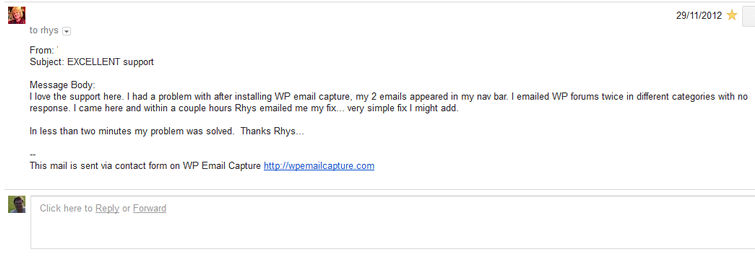
happyemail

People were happy with their purchase, and people who weren’t happy with the purchase were happy with the support that made them happy with their purchase, which is great!

4. Success Happens Quietly, Failure Happens in Full View

At the moment, WP Email Capture premium has had just short of 200 sales, with support tickets hovering somewhere around the 80 mark. In short, the majority of my customers I’ve not spoken to. I’ve no idea If they like the plugin or not. I assume they do, as they haven’t taken advantage of the refund offer I have and the open rate of the buyers newsletter (which tells premium users that there is a new version of the plugin available) is over 75%. But beyond that, I know very little.

Incidentally, the first buyers newsletter where I specifically ask for feedback – a “State of the WP Email Capture” – will be sent in the next week or so.

However, success is quite quiet. Failure on the other hand is usually quite open.

Disgruntled users are often quick to complain that a plugin doesn’t do what they think it should, which hurts a bit.

This leads me onto the next point though.

5. Customers are not Clients

This is quite a big one for me.

You see, even though I am thankful for buyers, I’m not completely at their beck and call for them. Would you expect J.K. Rowling to write your wedding invitations because you purchased a Harry Potter book? Not really.

I have suffered some quite hurtful comments when users send over support requests, often due to them not reading documentation or (in one case) choosing to ignore it.

These are customers, and are not clients. I haven’t any contract between them, so often with these people I give a refund. You shouldn’t put up with hours of work, often with little or no reward, for the price of a plugin.

I should point out that 99.99% of customers are wonderful, and you will not have any problems.

And free users? Well I’ve already gone on record with what I think to people who are quite rude when requesting free support. I’ve no problems telling them well to go (and have done so in the last week). I’m not like this with everybody, and am usually quite helpful. But if you don’t treat me with respect then don’t expect me to help you.

6. Problems Working With Clients Are Easy To Deal With When You Have Customers

One of the best things about working with customers over clients is that issues for clients which are disastrous, are actually largely okay with customers.

Take for example the world’s worst form of feedback: “It’s buggy”. If a client came back to you and said that, then all of a sudden it becomes an issue you have to deal with.

However, I had a customer say the plugin was “buggy”. Turns out the WordPress version he was on was on 2.8.1, and my plugin was incompatible. After explaining this and explaining that his version was old, he upgraded and apologised.

7. When Securing Your Social Profiles, Don’t use “Coming Soon”.

Otherwise you end up with this, 15 months after launch……
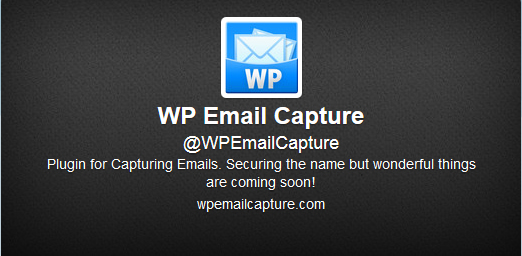
15 months promotion

8. Get a Good Accountant the Second You Become Moderately Successful

Just trust me on this one.

9. Get Good At Marketing (or outsource it)

WP Email Capture was a remotely successful plugin when I started development on the premium version (20k ish downloads? Around that.) and when I released the plugin I had 2 sales on the first day, and then one sale the day after, and then it slowly died down.

Fact was, I had to start marketing it. Both of those sales days paled in comparison from when I was devoting 100% of my free time on developing and marketing the plugin. An interview on WP Daily (now torquemag) got me 4 sales in 1 day. I know correlation doesn’t mean causation, but it was nice.

In short, nobody cares about your plugin. Participate in the community, think about your audience, and get scribbling. Take every opportunity you can. Some will take off, some won’t (more on that a little later). But you need to be a good marketer, the “build it and they will come” mentality is rather dead, unfortunately.

10. Start Building Your List Yesterday

One of the best ways to market your plugin is by building your list.

If nothing else, even if you have nothing else, have a page on your site dedicated to your plugin, and stick a box on it to encourage signups: Mailchimp is free and good enough, Aweber is good as it’ll kick your arse into finishing the damn thing as you’re paying for it, Mailpoet is awesome if you’re on a dedicated server. Forget any of the top CRO tips out there, releasing a plugin has been the singularly best way to build an email list.

And if you cannot find a system for building your list, just install my plugin and you’ll come back to it later :).

11. Don’t Worry Too Much About Your Blog

WP Email Capture’s blog is rather quiet. In fact, except for plugin updates and a few recent guest posts, it’s rather dead.

I’m looking into improving it with guest posting and maybe just commissioning a few articles, but that is way down the list. By and large though having a quiet blog hasn’t really affected traffic to the site.

Do rudimentary content marketing (i.e. search for your brand name on Google and see what other searches appear, write a blog post about each of those searches), but other than that it’s quite sufficient as is.

12. Nobody Cares About Your Affiliate Programme

This was one of those things that I thought would take off but didn’t. Fact is, you can have generous commission structures, but nobody really cares too much about your affiliate programme. One guy is making a decent amount on the WP Email Capture affiliate programme (~$100/month), and that’s it. I think I’ve had about 20 people sign up for it.

Affiliate programmes, as well as  your actual site, requires work. See if you can get a few people interested, but don’t worry too much about it.

13. Don’t Stop Free Development

One thing I was key on doing is not stopping free development, and it has benefited the plugin in a few ways.

First of all is the nice rush of downloads whenever there is a new version of WP Email Capture released, many of these are old customers updating the plugin, but many are new users. Users can turn into customers.

Secondly by getting new people looking at the plugin in itself can get ideas for added features, this is handy in increasing the value of your plugin. Though what I do is that if anybody suggests a feature, I will aim to make it either freely available or added in such a way that basic functionality is available for free.

14. Competitions are worthless if you’re not running them (or setting the rules a little bit).

One thing I don’t really understand too much but are popular are competitions. You know the score, a website will come to you, and ask if they can run a competition on your behalf. If the competition is “Retweet this for a chance to win!”, what they usually get is the following:-

  • More twitter followers.
  • Twitter retweets and increased exposure.
  • A copy of the plugin (which I am not too bothered with).

And you get is usually nothing. Exposure wise it’s minimal for you (people who enter competitions are not usually buyers), furthermore you don’t even get a link to your site, as the link is usually an affiliate link.

Personally, I’m not a fan, and I’ve never made a sale from a competition.

I’m not saying that competition are a rubbish way to get exposure, but you need to help run it. Make sure one of the entrance conditions is to follow you. A service like Rafflecopter make this quite easy. Alternatively run the competition yourself, and therefore get all the benefit. That will work.

15. Do it! You don’t suck as much as you think!

This is the key thing for me. I’m an okay coder. I’m not great, but can code to decent WordPress standards and my code is usually functional and works well. You are probably similar. Trust me, it’s one of the best things I’ve ever done.

Clever Git

My transfer from SEO to pretty-much-full-time-WordPress-developer has been rather swift. I’ve learned a lot in the past year and a half, not only from the technical side and coding (seriously, I’m struggling reading previous code that I wrote from a year or two back), but also from project management perspective.

I heard about Git from a few people. “You need to be on Git!”, they say. “It’ll save your life one day!”, they say. But it scared me a little bit. The only bit of version control I’ve been familiar with for years was SVN which was how the WordPress Repository runs. However, it scared me more not to learn Git, so after a fascinating talk by Jenny Wong at the last MWUG, an opportunity for a quick plugin, perfect for GitHub, presented itself via a support request for WP Email Capture. It was a plugin which would’ve taken an hour or so to code together, which required little or no support, and perfect to stick on GitHub.

So an hour or two later the Multisubscriber Plugin for WP Email Capture was born.

It’s a plugin that allows you to subscribe to any list in the Premium version of WP Email Capture. Obviously for this plugin you require the premium version of WP Email Capture (which you can buy using a the code of THANKS30 until Monday). It’s unsupported, and doesn’t really work outside the box beyond the support request, but it’s there for you to play with.

Should you wish to play with the plugin, you can see the repository for this plugin on GitHub, or (like/follow/friend?) me on GitHub as well. Here is my GitHub profile.

Anyway, am still learning, so would love to hear your GitHub tips! Please share them in the comments. Cheers.

WordCamp Europe 2013 – A Welshman’s Thoughts

Last weekend the first ever WordCamp Europe took place in Leiden, which is a smallish town a stone’s throw away from Amsterdam in The Netherlands. After attending earlier in the year WordCamp UK (you can read my thoughts on it here), I was excited to spend 2 days in the company of fellow WordPress geeks.

Pictures will appear from my day and a bit in Amsterdam & Leiden in a more touristy fashion later this week, but here are my thoughts on the talks I attended.

wceu-vitaly

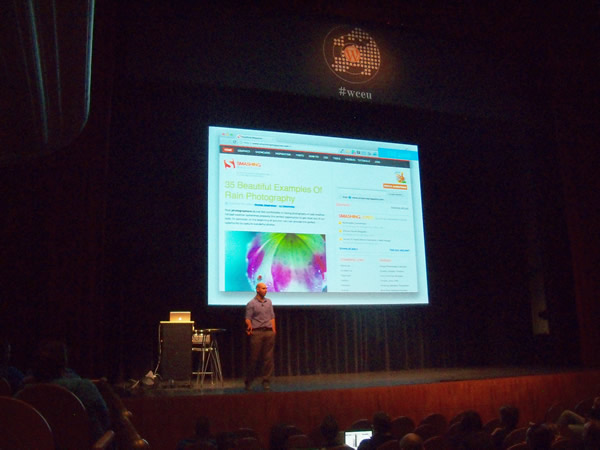
Vitaly Friedman (@smashingmag) – I Want To Be A Web Designer When I Grow Up

The first talk was from Vitaly Friedman, the co-founder and editor in chief of Smashing Magazine. This talk was focused on the growth of Smashing Magazine, it’s popularity over time, it’s ups and downs and tips and tricks along the way. It was insightful to see behind the scenes of the growth of such a popular blog, and at times it was a personal account on how it grew.

Smashing Magazine started as a a bunch of list articles, but expanded into an editorial rich website with products and conferences supporting it.

Key Takeaways

wceu-rocio

Rocío Valdivia (@rociovaldi‎) – BuddyPress and a Multi-site Case Study

Rocío’s (of Mecus) talk focused around elclubexpress.com, a multi location Spanish Social Network. The solution they used was BuddyPress with WordPress Multi-Site. Rocío talked us through the development, the challenges faced and how they overcome them.

Key Takeaways

wceu-tammie

Tammie Lister (@karmatosed) – The Life Of The Theme

Tammie’s talk covered the life of a theme, how to build one from the start and to the end of the theme life – if the theme even ends.

Tammie (of Logical Binary) talked her through her process of designing a theme – from concept to completion – and what we could learn on it – though it’s important to remember that processes are currently changing, and you should as well.

Key Takeaways

wceu-kim

Kim Gjerstad (@kgjerstad) – Is The Freemium Model Right For Your Plugin?

The next talk was a replacement talk, but one I was rather interested in hearing through my work on WP Email Capture: the Freemium Model and see what it is like.

The speaker – Kim Gjerstad – was the head of MailPoet (formally Wysija), and he told his story over the last 18 months in the release of the plugin.

Key Takeaways

wceu-panel

Running a European WordPress Agency – Panel

The next talk was all about running a European WordPress Agency. It was a panel featuring Simon Dickson (@simond) of Code For The People, Tom Wilmot (@tomwillmot‎) from Human Made, Remkus De Vries (@DeFries) from ForSite Media, Arnstein Larsen (@ArnsteinLarsen) from Metronet.

This discussion was surrounding how to grow a European based search agency.

Key Takeaways

wceu-vladimir

Vladamir Prelovac (@vprelovac) – A ManageWP Case Study

Vladamir Prelovic is head of ManageWP and talked us through the process of creating a WordPress plugin business from scratch, and how he grew from a bunch of free plugins to ManageWP.

Key Takeaways

wceu-brad

Brad Williams (@williamsba) – Writing Secure WordPress Code

The final talk for me on the first day was how to write secure WordPress Code by WebDevStudio‘s Brad Williams. Brad’s talk was quite heavily code based but also had a lot of snippets that could be taken away. A lot of the coding examples were present in the WordPress Codex so it’s always good to refer to that instead.

Key Takeaways

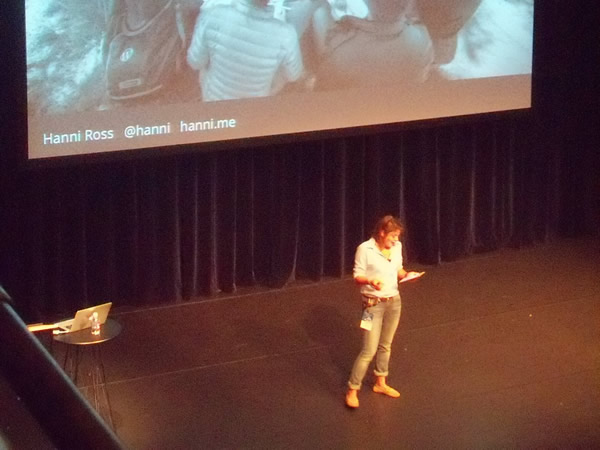
wceu-hanni

Hanni Ross (@hanniross) – Being Part of WordPress

Hanni’s talk was interesting, as it covered her journey on how she began with WordPress at the age of 14, through to her current role in the community, and how it helped her grow and how it could help you grow and getting your foot in the door.

Key Takeaways

wceu-matt

Matt Mullenweg (@photomatt) – Q & A

The next talk was a Q & A with Matt Mullenweg, head of Automattic, and co-creator of WordPress. This session simply started with a brief introduction from Matt, questions were asked to him about WordPress, Automattic and the WordPress Foundation.

Matt Mullenweg’s vision for the future of WordPress is to democratise publishing , and there’s still a lot of work to do to localise it – it would be great to have a localised plugin directory for each country. Language packs are probably the most important part of WordPress democratise publishing. Matt would love WordPress to power the majority of the web, or Open Source software. He expects in the next 5 years that open source software will power the majority of the web .

It is unlikely for there to be a WordPress Certified programme as it won’t be an open curriculum, Matt recommends clients to look at profile.wordpress.org to differentiate between coders – Code Poet may bring a developer rank.

Accessibility can be tricky to develop as a lot of accessibility tools don’t meet web standards.

The plugin directory is unlikely to have a seal of approval for code, as it is difficult to make it scalable. Matt encourages the community to leave reviews for each plugin they use – Matt also has recommended agencies to do this, and is leading this with the wordpress.com wordpress.org account.

WordPress to grow will need to keep an open mind.

Supporting the local WordPress Community through local meetups is the best way to contribute to the community  and to help the community grow. The WordPress Foundation is looking to help this, particularly through the costs involved with Meetup.

Matt recommends that as a developer you learn Javascript.

wceu-noel

Noel Tock (@noeltock) – Less Is More: The Journey of Happytables as a SaaS

Noel Tock from Human Made talked us through the development of Happytables, a Software as a Service built on WordPress designed for the restaurant industry, particularly the long tail restaurant industry with not much budget.

After the first release they found they had a lot of power users, users that were familiar with WordPress, but none of the target market. After some work they redesigned it for Happytables 2.0, that was aimed at the restaurant owner.

Key Takeaways

  • They were expecting push back, but people in general were happy being told what to do.
  • Happytables USP over website builders was to help them build the business. It has an automated way to send newsletters once a week.
  • Another problem they find was to keep users engaged. Some small business owners see websites as a disposable resource so they are unlikely to update it. They sent out weekly newsletters to clients with a call to action on relevant opportunities

wceu-dre

Dre Armeda (@dremeda‎) – Real WordPress Security: Kill The Noise!

Dre Armeda’s talk was a high level talk on Security. Security has become a major business (one that Dre’s company, Sucuri, is a big player in) as the internet gets bigger. Dre quoted some figures, that there were over 2.4 billion internet users today, which equates to a 480% growth in the last 11 years. There are 2+ million Malware Strings every month, which costs the US over $2+ billion a year, and Google issues 3+ million warnings and blacklist 10k sites a day.

Hacks happen mainly because hacked sites can make affiliates a lot of money, rather than any target. No site has no risk associated to it, and the main issues arise from outdated software, exploited passwords, hosting issues and zero day exploits.

Key Takeaways

wceu-miriam

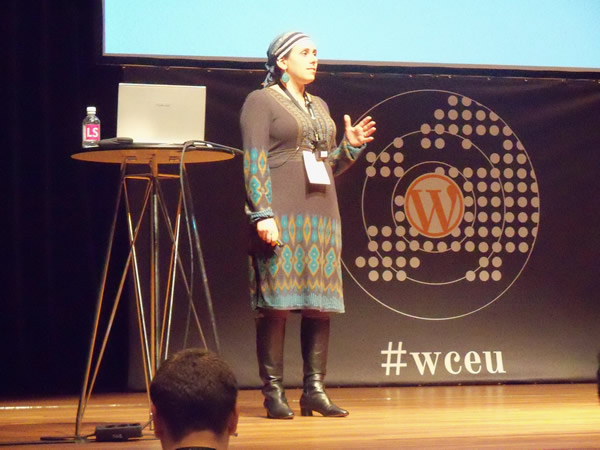
Miriam Schwab (@miriamschwab) – Learn From My Mistakes! The Business of WordPress

Miriam’s talk was a talk on WordPress as a business, as in running Illuminea – an agency surrounding WordPress and the challenges faced. Miriam’s talk was very open in some of the troubles she faced when running her business.

Key Takeaways

  • Diversify Your Services – a lot of WordPress’ work is project based – think of ways to secure recurring revenue including WP Hosting/Maintenance, Digital Marketing, Courses & Consulting.
  • Use a CRM, now.  Only 0.5% of people use CRMs. A CRM gives you valuable data on projects and data on leads.

wceu-yoastPhoto Credit – “My Personal WordPress Hero” Kimb Jones

Joost de Valk (@yoast) – A Victory For The Commons

The final talk of the conference was from the ever-present Yoast. In it he implored the audience to make money and to expand the ideals on open source. At present, making money from WordPress is still in it’s infancy – Yoast’s talk was all about how you and why you should benefit yourself as well as the open source community, and how he does it.

Key Takeaways

Final Thoughts

Overall, I really enjoyed this Two-Day WordCamp. By being the first European WordCamp you met a lot of the bigger players in the WordPress community, particularly those from the States & further afield (particularly a few who travelled from Australia). Also – it was great to finally meet Ryan after speaking for a fair few years!

It was also remarkably slickly organised – Wi-fi issues aside I cannot remember of one thing going noticeably wrong. Also Leiden was beautiful, and I’m so glad I attended – as it’s inspired me to grow further and grow with WordPress (and maybe help WordPress grow? I was quite interested in hearing about the Handbooks which I could help with).

Here’s to next year!